
Summary:
- Skin tags are benign, soft growths that hang from a thin stalk; they are not dangerous, but professional removal is the safest route.
- Private clinics in Malaysia use electrocautery, cryotherapy, surgical excision, or laser ablation depending on the tag’s size and location.
- A typical appointment takes 20 to 30 minutes and is comfortable enough to fit into a lunch break.
- Skin tag removal price in Malaysia typically ranges from RM80 to RM2,000 per lesion; the spread is driven by size, method, and clinic tier.
You’ve spotted a small, soft growth catching on your collar or getting snagged on a necklace every time you move. You searched online, and the prices you found ranged from RM80 to RM2,000 with no clear explanation of why.
Skin tag removal is one of those procedures where the information online is either overly clinical or frustratingly vague. This article is a straightforward walk-through: what skin tags actually are, what the removal procedure involves at a private dermatology clinic in Malaysia, and how to read a quote so that you can book with confidence.
What Skin Tags Actually Are
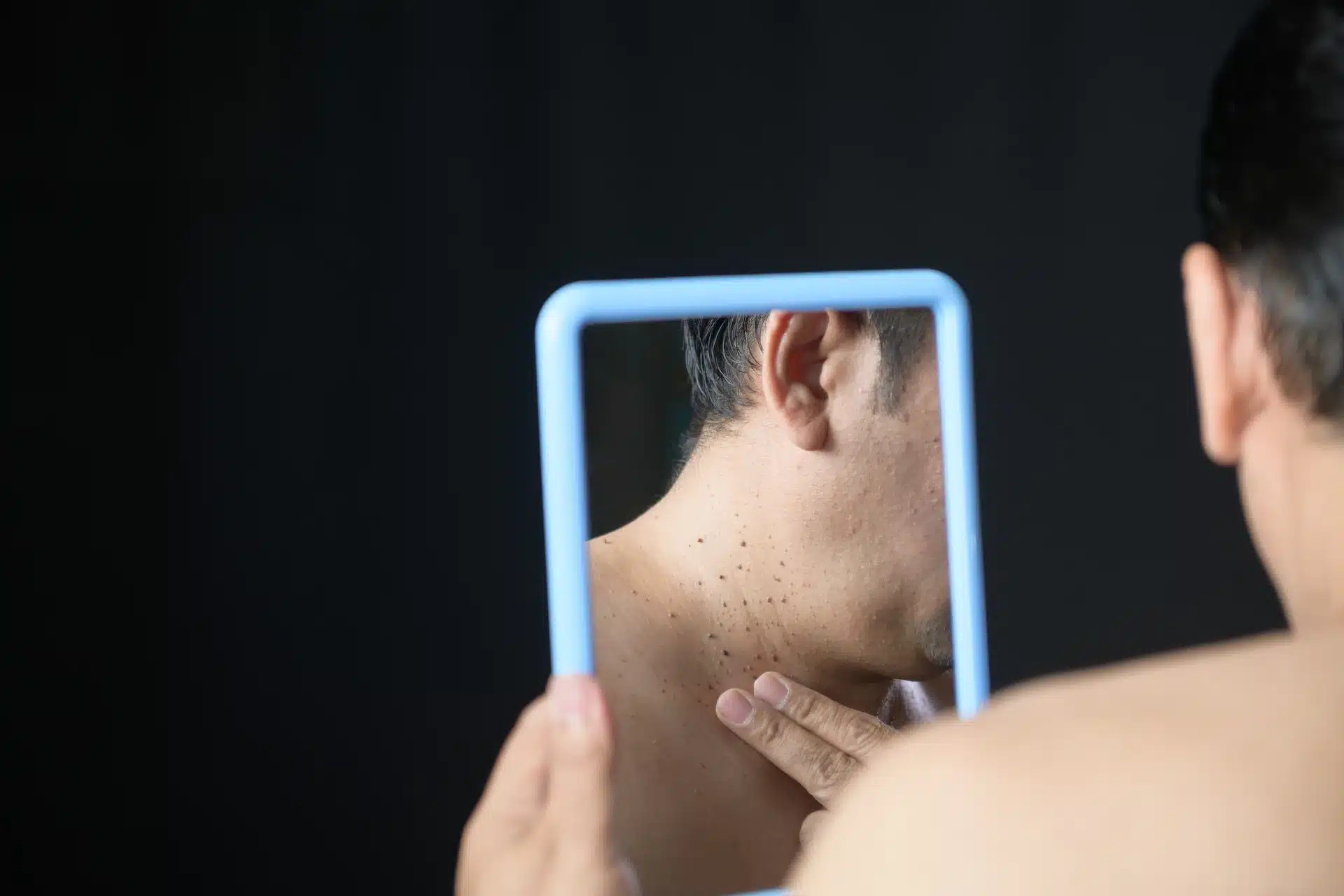
A skin tag is a small, soft, benign growth that hangs from the skin on a thin stalk. They appear most commonly on the neck, eyelids, underarms, groin, and beneath the breasts.
Skin tags are not moles, warts, or seborrhoeic keratoses, though they can look similar to the untrained eye. Moles tend to be flat or raised with uniform pigmentation. Warts have a rougher, more irregular surface. Seborrhoeic keratoses are thicker and often look as though they’ve been stuck onto the skin. Some look-alike growths occasionally need a closer look to rule out anything more serious.
If you’re not certain what you’re looking at, a quick visual assessment by a dermatologist usually settles the question in a matter of minutes.
Why Skin Tags Appear in the First Place
Skin tags form most often where skin rubs against skin or against clothing and jewellery. Weight gain tends to increase incidence as skin folds multiply, and hormonal shifts during pregnancy or menopause are also recognised skin tag causes.
There is a metabolic dimension worth knowing about. Multiple skin tags appearing in clusters have been associated with insulin resistance and metabolic syndrome. This isn’t a diagnosis on its own, but if you’re noticing several tags appearing across different body sites, it’s worth mentioning to your doctor.
Tags often return in the same area when the underlying friction or weight pattern continues. The conversation worth having with a clinic isn’t only about removal; it’s about whether anything in your daily routine is driving recurrence.
How Skin Tags Are Treated at a Private Clinic in Malaysia
Private dermatology clinics in Malaysia typically offer 4 main approaches.
| Method | How It Works | Best Suited For |
| Electrocautery | A fine probe delivers heat to burn off the tag at the base | Small to medium tags on the body |
| Cryotherapy | Liquid nitrogen freezes the tag, which then falls off over days | Small, accessible tags |
| Surgical snip excision | The stalk is snipped cleanly with sterile scissors or a blade | Larger, pedunculated tags on the neck |
| Laser ablation | A focused beam vaporises the tag tissue | Delicate areas including the eyelids |
The right method depends on where the tag sits and how large it is.
Home removal methods, including string ligation, over-the-counter freezing kits, and vinegar applications, carry real risks. These include infection, scarring, and the possibility that what you’re treating is not actually a skin tag. Treating an atypical lesion at home can delay a diagnosis that matters.
What the Skin Tag Removal Procedure Actually Involves
A typical in-clinic visit runs as follows.
- Step 1: Consultation and Visual Assessment: The doctor examines each lesion, confirms it’s a skin tag, and discusses which treatment method is appropriate.
- Step 2: Written Quote: A reputable clinic will provide a written breakdown before any procedure begins.
- Step 3: Topical Anaesthetic or Local Injection: A numbing cream is applied to the area, or a small local anaesthetic injection is given for larger tags.
- Step 4: Removal: The removal itself typically takes under a minute per tag.
- Step 5: Wound Dressing and Post-Removal Review: The site is dressed, aftercare instructions are given.
Most adults describe the sensation as a brief pinch. The full appointment, including numbing time, usually runs 20 to 30 minutes — comfortably within a lunch-break window. If you’re nervous, ask the doctor to start on the smallest, least sensitive tag first so you can gauge your comfort before continuing.
How Much is the Price for Skin Tag Removal in Malaysia?
Skin tag removal price in Malaysia varies for several genuine reasons — knowing them helps you compare quotes accurately.
What drives the price spread:
- Size and Location: Larger or more technically demanding tags, such as those near the eye, cost more.
- Method: Laser and electrocautery typically command a higher fee than a simple snip excision.
- Clinic Tier: A specialist private dermatology clinic in Kuala Lumpur’s central business district will price differently to a general aesthetic clinic in a suburban mall.
- Histology: If a lesion is sent for laboratory testing, this is billed separately.
Typical fee structure at Malaysian private clinics:
| Component | Usually Included? |
| Consultation | Sometimes bundled, sometimes separate |
| Anaesthetic | Usually included |
| Removal (per lesion) | Core charge; tiered discounts often apply for higher counts |
| Wound dressing | Usually included |
| Histology (if applicable) | Billed separately |
When comparing skin tag removal cost across Kuala Lumpur clinics, ask for an itemised written quote rather than relying on a phone estimate. Tag counts are rarely accurate until a doctor has seen the area properly.
If you are not sure what you are looking at, or you are ready to have it removed, consult a dermatologist to assess the lesion, confirm it is benign, and give you a clear treatment plan on the same visit — without pressure and without surprises.
Caring for Your Skin After Skin Tag Removal
Post-procedure care is straightforward but matters for how clean the final result looks.
Immediate aftercare:
- Keep the area clean and dry
- Apply any prescribed antibiotic ointment as directed
- Avoid picking at the small scab that forms; it will fall away on its own
- Skip swimming and heavy exercise for the first few days to prevent irritation and infection.
Healing timeline:
- Scab forms within 24 to 48 hours
- Scab falls off naturally within 1 to 2 weeks
- Residual pinkness fades over 4 to 8 weeks
- Most people see fully settled skin within a month.
A small dab of SPF applied daily to a healing tag site on the neck or face significantly reduces the risk of post-inflammatory pigmentation.
Signs You Should See a Dermatologist About a Skin Tag
Most skin tags are straightforward, but there are situations where professional assessment is important before any treatment is considered.
Seek a dermatologist promptly if a growth:
- Changes in size or colour relatively quickly
- Bleeds without obvious cause
- Becomes painful or tender
- Has irregular, uneven borders
- Looks different from the other tags on your body.
Always opt for professional removal (regardless of how the lesion looks) if:
- The tag is on the eyelid or near a mucous membrane
- You have a personal history of keloid scarring
- Multiple tags have appeared in a short period
- A previous home removal attempt has not healed cleanly.
A dermatologist can typically confirm benign status quickly, and a straightforward lesion can often be removed the same day.
Plan Your Treatment with GTS Dermatology
At GTS Dermatology, Dr Gan Teck Sheng assesses each lesion in person, recommends the removal method best suited to its size and location, and provides a transparent skin tag removal price in writing before any procedure begins.
Dr Gan’s practice covers the full range of methods used in private dermatology in Malaysia, including electrocautery, cryotherapy, surgical excision, and laser ablation, with treatment recommendations tailored to your skin type, tag characteristics, and personal comfort.If you are ready for an honest assessment and a clear written quote on the same visit, book a consultation at GTS Dermatology.